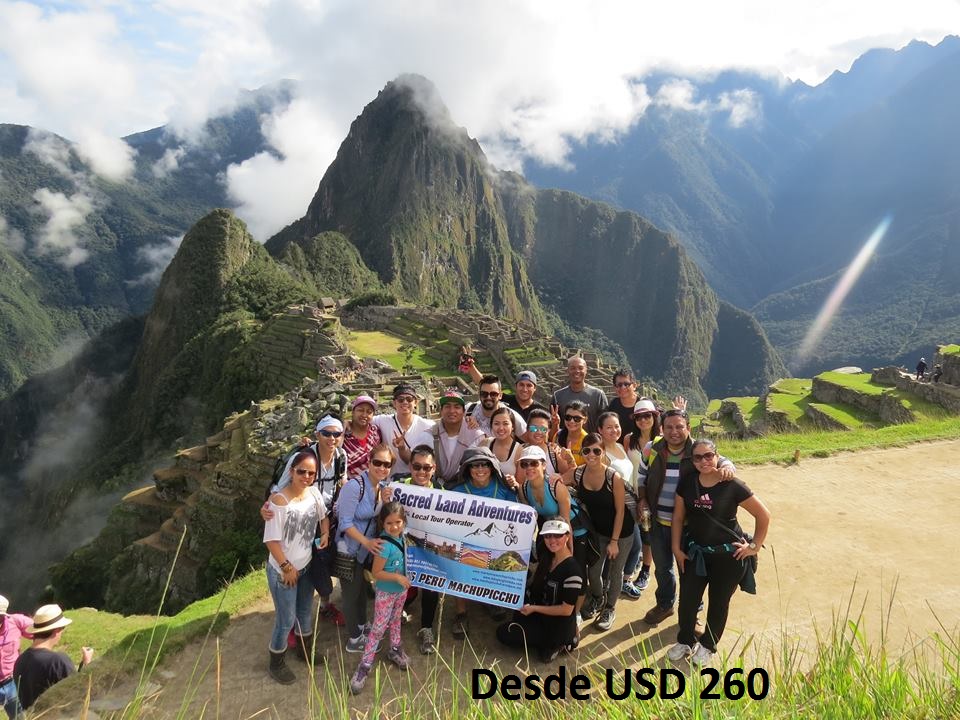
Tours Machu Picchu Historical Sanctuary
Tours Machu Picchu Historical Sanctuary
Historic Sanctuary Machu Picchu Tours: Tours to Machu Picchu is where you view as protect endangered species such as the spectacled bear (Tremarctos ornatus) and the cock of the rock (Rupicula peruviana), as well as archaeological remains of Machu Picchu. You should also preserve a peculiar flora and fauna, and scenic beauty of the surrounding forests of the Inca Trail to Machu Picchu, Inca jungle trek to Machu Picchu, Salkantay trek to Machu Picchu, Lares trek to Machu Picchu, Choquequirao trek, trek Ausangate, Vilcabamba sacred valley of the Incas, and many more, as well as contribute to the protection of the archaeological remains located on the Inca Trail and the Sacred Valley. Much of the beauty and charm that surrounds Machu Picchu tours, spectacular natural environment: the mountain forests of this historical sanctuary of Machu Picchu.
It was discovered scientifically in 1911 by Hiram Bingham. It is known as the Lost City of the Incas, it is also considered one of the wonders of the world due to the handling and size of the stones comprising the legendary and spectacular building, which highlights its terraces, its terraces, its strengths, walls, cemeteries and aqueducts over chasms, all surrounded by enormous mountains that give a globally recognized and that makes it a prime attraction for international and domestic tourism flows extraordinary landscape.
The Historic Sanctuary of Machu Picchu is located between the districts of Machu Picchu and Ollantaytambo, province of Urubamba, department of Cusco, has an area of 38,448 hectares; and protects the environment, cultural, archaeological and historical natural resources located within the sanctuary; also protects the flora, fauna and the landscape that surrounds not only the Inca city of Machu Picchu, but the vast network of Inca ruins united by the Inca Trail. Part of representative wildlife sanctuary Inca consists of the Cock of the Rock (national bird of Peru), the Andean bear or ucumari, the dwarf deer or sachacabra and a variety of bird species (423 species). As for the flora, you can find over 350 species of orchids, many of them unique in the world, including the presence of 12 ecological zones are distinguished. Architecturally the Inca sanctuary is divided into sectors or areas.
Part of its Inca architecture is also represented by the buildings located on the mountain of Huaynapicchu (Young Mountain in Quechua), whose path begins at the sacred rock; reach the top takes about 1 hour. This pyramidal mountain houses many archaeological sites in the top you can see a set of platforms probably for ritual purposes, it is said that on top of the mountain, the visitor is sugestionado and has the feeling of being suspended in the air.
Another Inca architectural manifestations, constitutes Wiñayhuayna (2650 m), archaeological ending the endless downhill Inca trail, from here to Intipunku the way but dangerous is relatively flat with a small slope going through more defined, dense, humid forests and high, mostly covered by bushes and grass between soil and rock that allow appropriate conditions for certain species of orchids (eg Telipogon, Maxillaria, Brassia, Platystele, Elleanthus, Stelis, Cyrtochilum, etc) that require it.
A very short distance and time you reach the point called Intipunku or Sun Gate Here you can see millions of Tillandsias that line the vertical and challenging cliffs, you can also observe plants from different genres such as:. Epidendrum, Sobralia, Encyclia, Pelexia , Ellenathus, Lycaste, Bletia, Spiranthes, Pleurothallis, etc.
Notes to travel to Machu Picchu:
TOURIST USE considered by INRENA. Orchids of Machu Picchu are attractive as a research topic, not only for being unique or endemic, but mainly for the environmental and ecological conditions allow geographical that are collected in a sample Sui Generis.
At the bottom of the sanctuary, near the Vilcanota (1650-2300 m), various species of genres observed: Trichopilia, Anguloa, Maxillaria, Lycaste, Pleurothallis, Epidendrum, Dichae, Sobralia, Masdevallia, Stanhopea, Brassia, Erithrodes, Schomburgkia, Scelochilus, Cyrtopodium, Xylobium, Barbosella, Oncidium, mainly.
Within all these genres they highlight the Epidendum Secumdum known as Wiñayhuayna which means forever young. It is one of the most popular plants in the environment, grows in the open, on rocks or mossy trunks, flowers most of the year and the flower is 2 cm approx. The masdevallia veitchiana or Waqanki, which means you will cry, is one of the most beautiful species, grows between high and sparse forest or scrub; in rich, loose soil. It is endangered and the flower reaches measure up to 14 cm.
The Satigera Sobralia, also called flower of a day in its short duration and delicacy, usually grown in the open or under little shade, rich soil and loose, something wet; its flower measures 8 cm.
You may also notice Pisonay trees (Erythrina Falcata) and Q’euña high (Polylepis racemosa), Shapunga or tree fern (Cyathea sp), and bromeliads that every centimeter of the branches are disputed, including orchids, mosses and lichens, grouped branches giving it to the appearance of being lined with a green and wet coat.
On access to Machu Picchu Tours:
For foreign students to access the appropriate fee is required to submit the International Student card (ISIC).
Sale of entrance tickets to Machu Picchu:
INC Cusco
Calle San Bernardo S / N
L-D 7: 00-16: 00
INC Aguas Calientes “MachuPicchu pueblo”
Av Pachacutec S / N, LD Cultural Center (including holidays), from 5:. 00-22: 00 hrs. It should be noted that it is not possible to purchase the ticket for admission to the same historic sanctuary of Machu Picchu, only the above addresses and payment must be paid in local currency.
About system bus Aguas Calientes – Machu Picchu – Aguas Calientes:
The itinerary of the buses that lead from Aguas Calientes to the Machu Picchu Historical Sanctuary are: 5:30 to 15:00 hours and the schedule of buses leaving the Historic Sanctuary of Machu Picchu to Aguas Calientes is: 06 : 30 to 17:45 hours.
Travel time is approximately 25 minutes and costs are:
- Foreign adult: USD 00 (roundtrip)
- Foreign adult: USD 00 (one-way)
- Foreign child: USD 00 (roundtrip)
- Foreign child: USD 0 (one-way)
- National fee: USD 0 (roundtrip)
- National fee: 0 USD (one-way)
- National Student (on presentation of card): USD 00 (roundtrip)
- National Student (on presentation of card): USD 0 (one-way)
- National Child: USD 0 (roundtrip)
- National Child: USD 0 (one-way)
- Guide: USD 0 (roundtrip)
- Guide: USD 0 (one-way)
- Resident Cusco: S /. 0 (roundtrip)
- Resident Machu Picchu: S /. .00.
- Maximum capacity: 1500 people per day.
Tickets can be purchased at the offices of Consetur of Cusco, located at Av. Pardo Nº613, the opening hours are Monday to Friday from 9:00 to 13:00 and 15:00 to 18:00 hours or in the town of Aguas Calientes, at km. 111, at the height of the railroad
* Income
Ticket to Machupicchu:
Alien Child 0-7 years Free
Foreign Student S / 00 (with ISIC)
Foreign S / 0.00
Adult S / 0.00 (national adult)
National Student S / 0.00 (with ISIC)
National Child 0-7 years Free
Alien child 8 to 15 years S /. 0.00
National child 8 to 15 years S /. 0.00
Means of access to Machupicchu:
Railway or Train to Machupicchu:
110 km from the city of Cusco to Machu Picchu Pueblo
4 hours
Tourist Bus to Machupicchu
From Machu Picchu Pueblo to the monument
About 25 minutes
Private car – Public bus
From Lima to Cusco
20 hours
Activities Attractive
Butterfly watching, wildlife observation, wildlife watching, bird watching, medicinal baths, spas, mystical and esoteric rituals, trekking, hiking, camping, religious activities, Taking pictures and filming, cultural activities, guided visits, studies research.
Within the services Attractive
Toilets, security, hotels, hostels, Information Office, Tourist Protection Office
Services Outside Attractive to Machu Picchu
Toilets (District of Machu Picchu)
Electric lighting (District of Machu Picchu)
Topic / Medical post (District of Machu Picchu)
Facilities for Disabled (District of Machu Picchu)
Parking (District of Machu Picchu)
Mail (District of Machu Picchu)
Internet (District of Machu Picchu)
Hotels (District of Machu Picchu)
Inns (District of Machu Picchu)
Guest houses (District of Machu Picchu)
Information Office (District of Machu Picchu)
Tourist Protection Office (District of Machu Picchu)
Police station (District of Machu Picchu)
Restaurants (District of Machu Picchu)
Cafes / Snacks / Soda Fountains (District of Machu Picchu)
Types of Visitors to Machu Picchu
Abroad, Local, National, Regional
Seasonality to Machupicchu
April to October
Sources:
National Institute of Natural Resources – INRENA, Regional Directorate of Foreign Trade and Tourism -DIRCETUR
* Prices are referential.
** The opening hours are subject to change without avis
Tour DAY (s)
Daily DeparturesCertified guides
Travel and tourism agencyEvery month
Daily tripsTransportation included
Daily tripsPrice: $ /pax
CONTACT US
We are here to help. If you have any questions, call us:
(+51) 984 145 793
(+51) 84 254 776
info@toursperumachupucchu.com
sacredland.adventures@gmail.com